
GM160: calling the right team
The dispatcher has several field crews, and you need to contact one car or a certain group. Repeating a general voice call is inconvenient: an employee may decide that the message is related to neighbors, and a dispatcher may decide that the right person is already listening. When choosing Motorola GM160, it is useful to agree on a holistic process: attract the attention of the right correspondent, get his clear answer and hold a conversation in the accepted common radio network.
Request GM160 and Preparation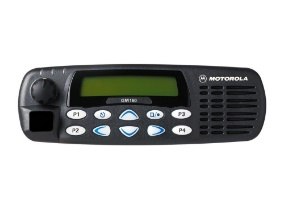
HelloMotorola can be requested. Motorola GM160 VHF. The current card indicates RUB 80,000 and status "in stock"; the price of the specific configuration, the available amount, condition and kit are confirmed in the quotation. For selection, describe the existing park and one regular working contact. Address call is discussed along with the setup of both sides, and is not assigned a ready-made function of any proposed device by the name of the series.
Name the recipient and the expected action
Imagine a service with several cars. The dispatcher needs to transfer the task to the brigade, which was released after the previous work. It's useful to distinguish three things in an application: which radio resource is being used, who is being addressed to, and what response the dispatcher is waiting for. "Calling a car" can mean simply saying it by voice, making an address, or leaving a separate alert for the employee.
Start with a few real-world roles, not a big list of codes. For example: dispatcher, service crew and duty vehicle. Then agree on the designations that are understandable to the employees. The chosen name should be the intended recipient. If the radio is transferred to another vehicle or crew, the order of change of assignment is discussed with the responsible network, so that the familiar name does not indicate another participant unnoticed by the dispatcher.
Selective Call and Call Alert solve different parts of the problem
Motorola’s GM160, 68P64110B87-A, September 2003, describes Selective Call, a call to a specific station or group supported by an alarm protocol used. Call Alert is set apart as a notification to another user. This helps distinguish between the appeal for subsequent conversation and attracting attention. The signal itself does not mean that the person understood the content of the task. GM160 Manual, Radio Calls section.
The GM160 specification lists the Conventional/MDC alarm, address book, and incoming call alert. These features are the basis for configuration selection; the exact protocol and functionality support in the existing fleet are verified separately. Motorola’s general label or the same range does not confirm the readiness of the targeted exchange. Specification Motorola GM160.
For the buyer, the result is important: the desired participant receives the intended appeal, understands who calls it, and responds in the accepted way. Exactly what it looks like on the correspondent’s equipment is confirmed for the selected models and settings. Don’t promise the same line on the screen of each station or transfer the design of one terminal to the entire mixed park.
What kind of treatment the service needs
| Controller task | What to consider | What to check on a working example |
|---|---|---|
| Contact all participants of the current communication | General voice call, as adopted | Audibility of the message and comprehension of the addressee |
| Contact a particular machine or group | Selective Call with Protocol Support | The right recipient recognized the appeal and responded |
| Attract the attention of an employee with a separate signal | Prepared by Call Alert | Alert spotted, then contact established |
| Transmit the task itself and clarify the details | Follow-up voice conversation | The parties agreed on the content and completion |
Such a comparison allows you to choose the desired function, without buying the entire list of features just in case. If the work is already organized by shared voice calls, it is useful to understand what specific problem addressing should solve. If an employee is physically unable to accept a conversation, one additional signal does not alter its availability. The order of waiting for a response and further appeal is set by the service.
A common channel remains a common work resource
In the scheme under consideration, addressing determines to whom the signaling refers. This does not create a separate frequency or additional simultaneous vocal tract for each brigade. The order of conversations and the employment of a common resource should be taken into account when planning the work of several groups. If a service requires independent simultaneous negotiation, it is an independent requirement for communication and equipment.
The technical response of the station does not replace the response of the employee. It is useful for the Manager to distinguish between “notification sent”, “user responded” and “task discussed”. The absence of a response does not prove the absence of a person or the serviceability of the rest of the communication sites. It is important to record the observed result rather than turning it into a conclusion that the equipment has not confirmed.
Check the usual handling of the existing park
Before ordering, specify the models of existing stations and the necessary areas of interaction. The responsible specialist coordinates the frequency parameters and the supported signaling of the specific configuration. For a commercial request, an unclassified description of the task and models is enough: keys, passwords and closed service codes are not required to be transferred. The necessary settings are discussed by the authorized parties in their established manner.
To check, select a simple work assignment. The dispatcher addresses the intended participant, the employee understands the appeal and responds, then they hold a conversation. Separately, the behavior of the other participants is observed: did they receive an unwanted notification? The result relates to the verified apparatus, configuration, and conditions; it is not the promise of permanent communication anywhere along the route.
After verification, it is useful to maintain an understandable purpose of the devices and an agreed order of response. When expanding the park, a new model is first compared to this result. So the purchase of the next station is not reduced to copying an unfamiliar configuration and does not require a re-explanation of the entire organization of work.
Order the GM160 for the right team
In the quotation, you can single out the apparatus, microphone, mounting, power supply and coordinated preparation work. Save accessories list by model; the front panel image does not define the entire delivery. Control, gateways and all correspondents are not automatically priced at a GM160.
For purchase, specify the number, current models, example of treatment and the desired composition. Add the company, details and the city of receipt – for example, Moscow, Chelyabinsk or Astana. The cost and delivery time for Russia and Kazakhstan are agreed upon by order. Such a request allows you to offer GM160 for an understandable working communication: the desired addressee, the prepared alert, the person’s response and the subsequent conversation.
- Manager selects the intended recipient
- Prepared call or separate notification
- The right employee responds in the accepted way
- Voice conversation and clear conclusion
Appeal addressed to a specific brigade A common frequency resource does not become a separate simultaneous line.
There's no human answer. Contact has not yet been confirmed; further order is determined by the service.
Design organization of conventional communication, not ready configuration of any GM160. Alarm support and behavior are checked at specific stations on both sides.
Questions before buying
Does the address call allocate a separate radio channel to the brigade?
In the described scheme, addressing determines the recipient of the request, and the voice uses an agreed common resource. Independent simultaneous conversations require separate network requirements; the number of recipients does not create them.
GM160 will be able to call any two-way radio in our fleet?
Coinciding applicable parameters and model-specific signalling are required. The manual links Selective Call with the protocol’s capabilities; configuration and result are checked on existing hardware.
Does Call Alert mean the employee has already taken the job?
The alert draws attention. Confirmed contact requires an understandable human response and subsequent conversation; sending a signal or a technical response is not a job assignment.
The main product in our catalog
Motorola GM160 VHF
80 000 ₽ - card reference; the card indicates availability; the exact configuration and composition are specified. The status, documents and composition are confirmed in the quotation.
Request GM160 and PreparationDocumentation: Motorola GM160 Specification Sheet, GM160-RE (09/06), copyright 2006; Motorola Professional Radio GM160 User Guide, 68P64110B87-A, Issue: Sept 2003 - Manufacturer's Guide on Manualzz. These provisions relate to these editions; the applicability to the proposed configuration is specified separately.