
Catalogue › Interference-resistant GNSS antennas › Gamma-100: why a GNSS antenna does not replace a two-way radio antenna
Gamma-100: why a GNSS antenna does not replace a two-way radio antenna
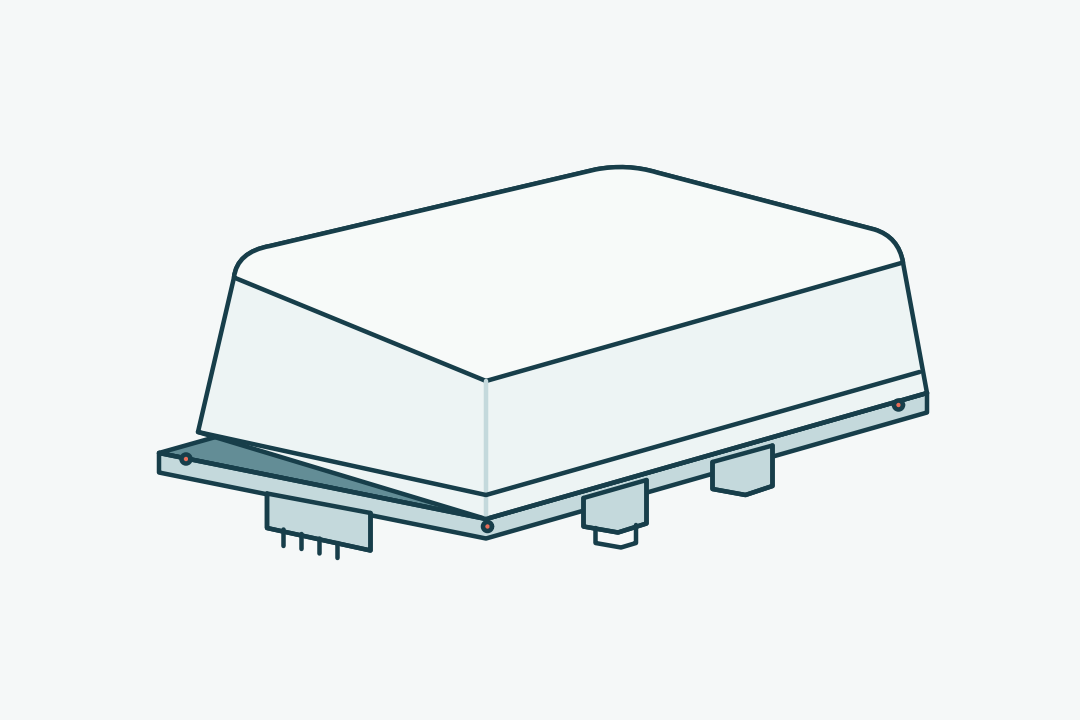
A practical look at the NavCom Gamma-100 interference-resistant GNSS antenna and its integration requirements.
The application
For a vehicle or a site, separate radio communication antennas from satellite navigation equipment. Gamma-100 uses the stated BDS B1, GPS L1, GAL E1 and GLO G1 bands. Its ratings do not describe a two-way radio transmitter, voice range or group radio coverage.
Agree these details before ordering
Agree 24 V power and RS-232, RS-422 or Wi-Fi integration with the navigation installation. Four antenna elements and up to three interference sources remain specifications of this separate product. Connection to a particular radio or coordinate-display system needs its own compatibility confirmation.
Reading the specifications
The model specifies 4 antenna elements, up to 3 simultaneous interference sources and 24 V power. Read resistance ratings together with the stated source count and agreed application conditions. These figures do not define antenna gain or a guaranteed operating radius.
Package and installation
The stated package comprises the antenna, a stabilized supply, a 10 m antenna cable, a 10 m power/data cable, mounting hardware and documentation. Series dimensions are 280 × 210 × 81 mm maximum. Agree mounting details, mating connectors and the data format for the actual equipment.
Model specifications at a glance
- Antenna elements
- 4
- Simultaneously suppressed interference sources
- 3 maximum
- Interference resistance
- 110 dB with 1 interference source; 95 dB with 3 interference sources
- Supply voltage
- 24 V
- Power consumption
- 8 W maximum
- Operating temperature
- −40…+85 °C
- Storage temperature
- −55…+85 °C
- Mass
- 2.0 kg maximum
Questions and answers
Does this equipment suppress UAVs?
No. This description concerns the GNSS receiving path. UAV detection or suppression is not stated.
Does an RS-232 or RS-422 interface establish compatibility?
No. Agree the protocol, line parameters and interfacing equipment. The source does not provide a full list of compatible instruments.